



Click here to view image
Titolo dell'opera:
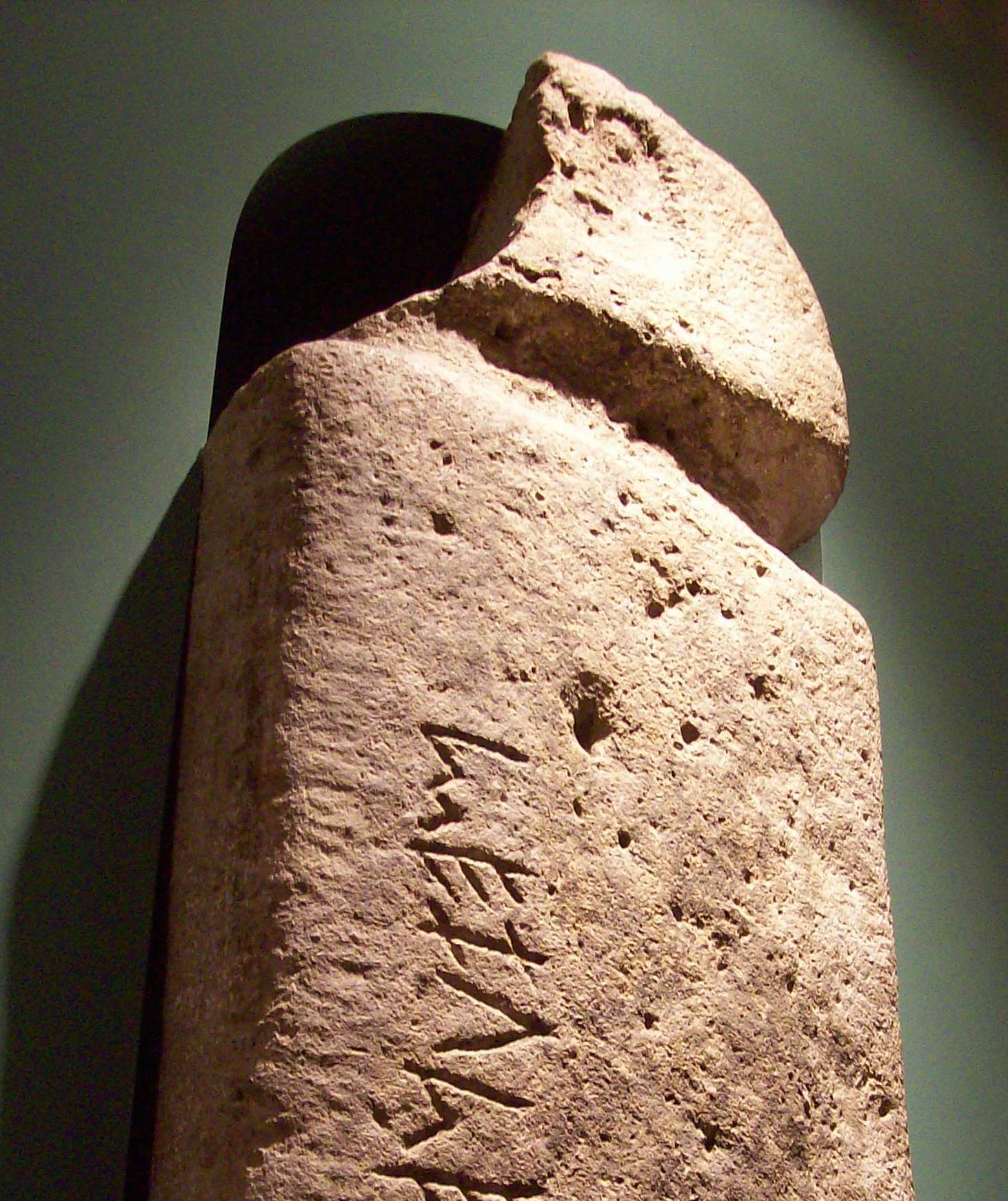
Stele of Zignago
Acquisizione:
1827 ritrovamento fortuito
Ambito culturale:
periodo eneolitico
Author/ School/ Dating:
Copper Age, middle of the 3rd millennium b.C.
Object Type:
stele
Epoca:
Chalcolithic - 3rd millennium BCE - 3000 BCE - 2001 BCE
Misure:
Unità di misura: cm; Altezza: 108; Larghezza: 37; Spessore: 24
Tecnica:
arenaria- scalpellatura
Ultimi prestiti:
Mostra di Arte Antica - Genova, Palazzo Bianco - 1892
I Liguri. Un antico popolo europeo tra Alpi e Mediterraneo. - Genova, Commenda di Pre - 2004
Back to Focus:
Descrizione:
Although there are no depictions of dating elements, the stele typologically belongs to those attributed to the Copper Age, perhaps type B in Ambrosi's classification. These are perhaps figures of ancestral heroes placed to mark pastures, deposits of raw materials or important routes during the Metal Age. This era was characterised by profound technological, social and economic changes: the discovery and use of metal objects; the spread of intensive sheep farming with the practice of burning forests to create pastures; the emergence of clans and other groups formed by blood relatives, whose burials are found in caves or monumental tombs. Recent studies link the phenomenon of stele statues to the development of new economic forms such as high-altitude pastoralism and the spread of human groups for whom it may have been important to mark certain elements of the territory that were of significant value within the society of the time.
During the Iron Age, the stele received an inscription which in the past was read as an Etruscan onomastic formula (“Mezio dei Nemùsii”) or a Celtic place name (“middle sanctuary”). Recently, preference has been given to emphasising the type of alphabet within a Lepontic-Ligurian linguistic area with an interpretation that, although controversial, seems to recognise it as an onomastic formula. The body consists of an almost rectangular slab; the head is separated from the torso by a low, wide throat; the face is formed by lowering the surface into a circular shape from which emerge the triangular nose and the two pads that constitute the eyes. Anthropomorphic features are thus reduced to a minimum and sexual symbols and weapons are also missing.