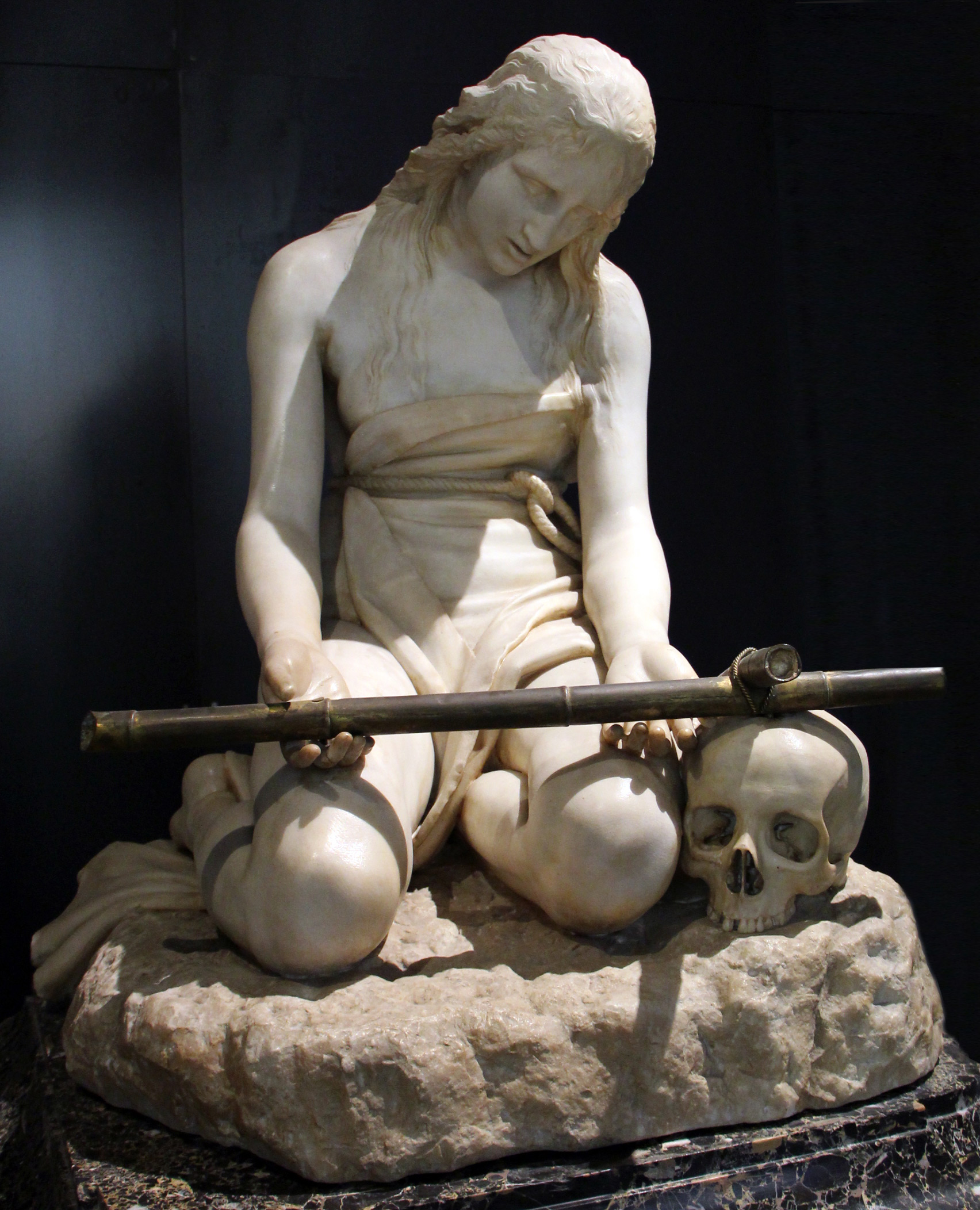
Foto di Antonio Canova "Magdalene"

Click here to view image

Titolo dell'opera:

Penitent Magdalene

Acquisizione:

Maria Brignole-Sale De Ferrari Duch. di Galliera 1889 Genova - legato

Autore:

Canova, Antonio

Object Type:

sculpture

Epoca:

1794 - 1796 - XVIII

Inventario:

PB 209

Misure:

Unità di misura: cm; Altezza: 95; Larghezza: 70; Profondità: 77

Tecnica:

marmo e bronzo dorato

Ultimi prestiti:

Canova: Sketching in Clay - Washington, The National Gallery of Washington - 11/06/2023 - 09/10/2023
Canova. Eterna Bellezza - Roma, Palazzo Braschi - 09/10/2019 - 15/03/2020
Canova e l'antico - Napoli, MANN - Museo Archeologico Nazionale - 29/03/2019 - 30/06/2019
La Maddalena tra peccato e penitenza - Loreto, museo-antico tesoro della Santa Casa - 2016-2017
Canova. L'invenzione della gloria. Disegni, dipinti e sculture - Genova - 2016
Hayez. Venezia 1791 – Milano 1882 - Milano, Gallerie d'Italia - Piazza Scala - 06/11/2015 - 21/02/2016

Back to Focus:
Descrizione:
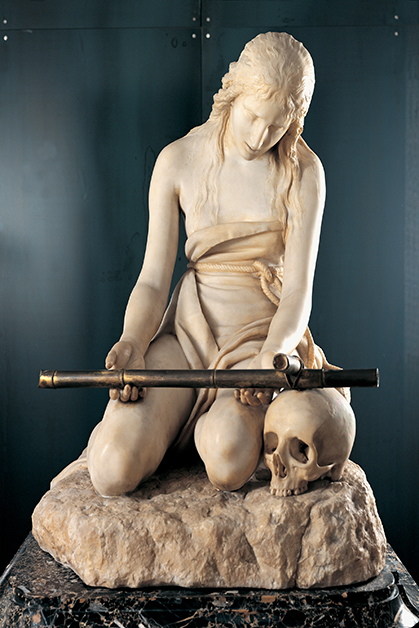
The Maddalena Penitente, one of Antonio Canova's most admirable marbles, constitutes the outcome of a long process of invention and study that began in the early 1790s and lasted, in the execution phase, from 1794 to the end of 1796. Commissioned by his friend and administrator Tiberio Roberti (1749-1817) from Bassano del Grappa. The sculpture was preceded by a drawing from Bassano's notebook Eb, a plaster model, identified with a sculpture in the Civic Museums of Padua and two sketches: one in earthenware, now in the collections of the Venetian Civic Museums, and one in clay, still in the Canovian collection of the Museums of Bassano del Grappa. By April 1794, the sculpture was in process and was finished if not before Ascension Day 1796, then immediately after. Posteriorly, on the drape that encircles the figure's sides, we read the date 1796, which an earlier ancient recalculation had mistakenly changed to 1790. The long experience of those years in the practice of bas-relief, had led Canova to reach «unexpected goals» (Mazzocca 2009) in «expression, contours, drapery», meaning in expressing the forms of the body and uniting them with feeling. The naturalness in the rendering of the marble with effects of strong sensuality in the figure and face from which the contrition and suffering of the young sinner's long penitential fasting, bordering on exhaustion, are rendered with a very refined technique, “Execution magique,” which achieves the result of a “soufflé créateur” (Quatremére de Quincy 1834). In 1797 Roberti renounced the purchase of the sculpture because of economic difficulties related to Napoleon's battles in the Venetian countryside. Francesco Milizia, the Venetian critic, procured Canova a new buyer in Giovanni Priuli (1763-1801), a Venetian national auditor at the Tribunal of the Sacred Rota, who virtually became its owner before June 1797, but did not take possession of it. During the Directoire years the sculpture was purchased for 1,000 zecchini (twice what was initially budgeted!) by Jean-François Julliot, a marchand, a man of great wealth obtained from para-military supplies during the Napoleonic campaigns in Italy and Egypt. On March 28, 1808, the lawyer Giovanni Battista Sommariva (1757-1826), a leading member of the Milanese triumvirate that had ruled the second Cisalpine Republic between 1800 and 1802, announced to Canova the purchase, probably made in Milan in late 1806, of the Penitent Magdalene together with the Apollino. In his Parisian palace, the exaltation of the “affects” was achieved with spectacular lighting, one would say today targeted, already fully Romantic, if not Symbolist, inside a boudoir lined in mousy gray silks with a mirror reflecting back to the visitor unseen. Exhibited in the Salon in October of that year, the sculpture was the object of universal admiration. Later transferred from Sommariva to Milan, it was sold to the marquis Aguado, ending up in 1839 back in Paris. Upon the latter's death, shortly thereafter, it was purchased for 59,000 francs by Raffaele de Ferrari, duke of Galliera, and placed in his Parisian residence, the Hôtel de Matignon. It then passed to Genoa in 1889 by legate of his widow, Maria Brignole-Sale de Ferrari, duchess of Galliera.
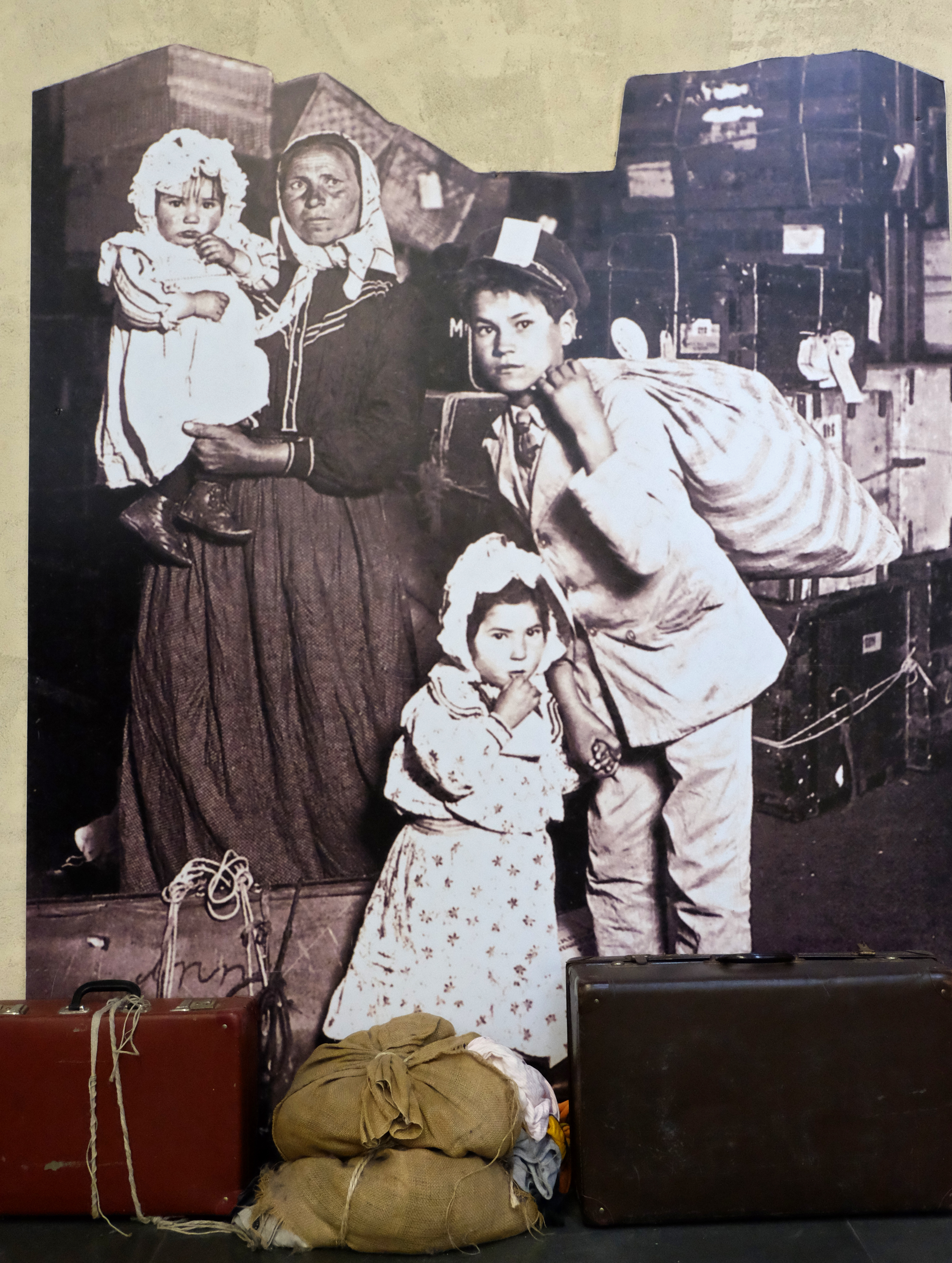
Foto di Exhibit MEM - Memory & Migration

Click here to view image

Author/ School/ Dating:

Museum Section MeM - Memory & Migration

Object Type:

Museum section

Descrizione:


The third floor of the Galata Museo del Mare is almost entirely dedicated to “migration” with the exhibit MeM Memory & Migration. The installation reconstructs the journey experienced by 29 million Italians between the end of the 19th and early 20th centuries, visitors experience this history through reconstructions, testimonies and over forty multimedia installations, many of which are interactive. The section was inaugurated on the occasion of the 150th anniversary of the unification of Italy.


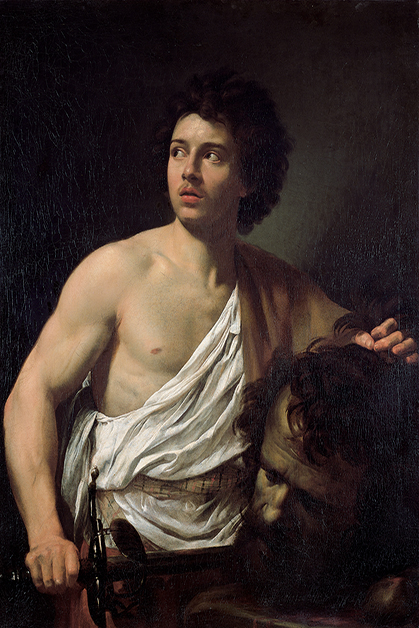
Foto di Simon Vouet / David with the head of Goliath

Click here to view image

Author/ School/ Dating:

Simon Vouet (Parigi, 1590-1649)

Object Type:

Painting

Technique and Dimensions:

Oil on canvas, 121 x 94 cm

Descrizione:


Simon Vouet, French “Caravaggist” painter, must have painted this beautiful canvas between 1620 and 1622, the years in which his stay in Genoa is recorded and probably more specifically, during the summer of 1621, when he was a guest in the villa of Sampierdarena of the brothers Marcantonio and Gio. Carlo Doria. They were among the most prominent figures of the city both from a financial point of view and also in terms of patronage of the arts. Vouet painted various works, including in all probability, this David with the head of Goliath which, twinned with a Giuditta (still in a private collection), was then transferred to the town residence of Gio. Carlo in Vico del Gelsomino, now Via David Chiossone. The inventory of the Doria, and the documents relating to the subsequent hereditary passages of the family assets, gives us a glimpse of a collection of extraordinary works of art: Gio. Carlo also owned a Saint Catherine by Vouet , today in a private collection, a San Sebastiano being treated by a group of pious women, today in the Condorelli collection, and a Portrait of his client, now in the Louvre.
The painting depicts David holding the head of Goliath, showing a moment when the boy, turning his gaze to a point outside the painting, and holding the giant's huge head in his left hand, seems to reflect on the enormity of his achievement, accomplished with the help of God.
The refined colour combinations, the impalpable movement suggested by the use of light, the introspective air, the realism, the rigorous compositional choices are a severe reinterpretation of Caravaggio, so much so that this David was called "la plus caravagesque de toutes ses oeuvres connues".
As in the best works of Merisi, the other protagonist of the composition is light. From outside the frame, it bathes almost the entire figure of David, who appears, almost taken unawares by this aurora and turning his gaze towards the light, his movement is frozen in an ecstatic pose, his lips parted, almost as if in the grip of a divine vision.
The work passed to the Cambiaso family in the 18th century, and was purchased for Palazzo Bianco in 1923.

Loans:

Milan, Gallerie d'Italia
from 30/11/2017 to 08/04/2018
for the exhibition "L'ultimo Caravaggio. Eredi e nuovi maestri"

Tokyo, The National Museum of Western Art
from 01/03/2016 to 12/06/2016
for the exhibition "CARAVAGGIO and His Time Friends, Rivals and Enemies"

Fort Worth, Texas, Kimbell Art Museum
from 21/10/2011 to 05/02/2012
for the exhibition "Caravaggio and his follower in Rome"

Utrecht, Central Museum
from 14/12/2018 to 24/03/2019
for the exhibition "Utrecht, Caravaggio e l'Europa"

Monaco, Alte Pinakothek
from 16/04/2019 to 21/07/2019
for the exhibition "Utrecht, Caravaggio e l'Europa"

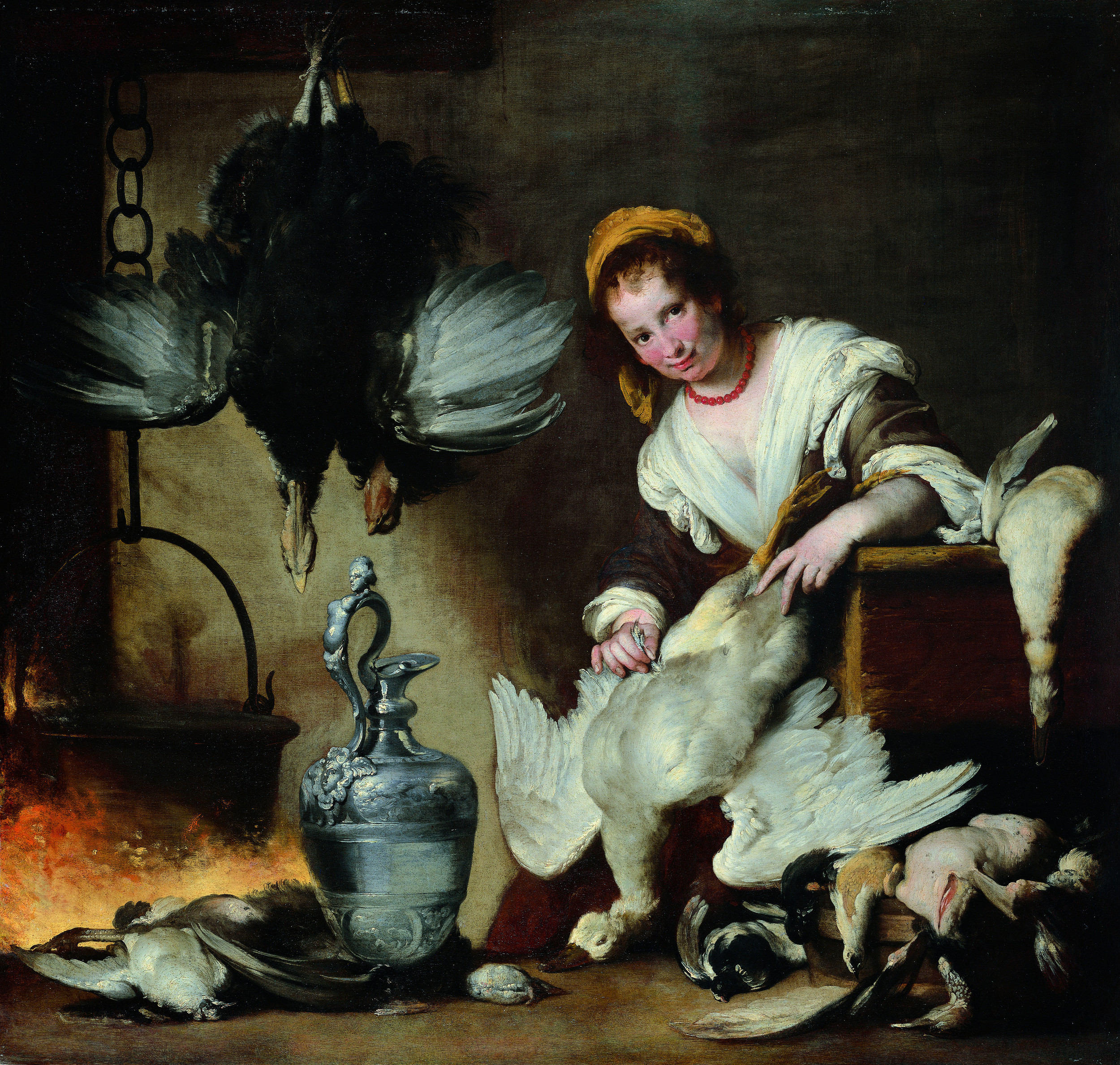
Foto di la cuoca

Click here to view image

Author/ School/ Dating:

Bernardo Strozzi, detto il Cappuccino (Campo Ligure o Genova, 1582 - Venezia, 1644)

Object Type:

Painting

Technique and Dimensions:

Oil on canvas, 176 x 185 cm

Descrizione:


Certainly Strozzi's best-known painting, this canvas, known as La cuoca, portrays rather a lowly kitchen maid intent on plucking a goose between chickens and pigeons, with a turkey hanging behind her, the scene is of the kitchen of a seventeenth-century Genoese aristocratic residence. At the time, in the families of the local nobility the profession of cook was reserved exclusively for men, while women were reduced to more humble tasks, such as plucking poultry; it is clear that the setting is of a great house from the presence in the foreground of a richly embossed silver dish, with an elaborate handle depicting a female figure.
The painting - which critics today believe belonged originally to the collection of Gio. Carlo Doria a cultured collector of what was then “contemporary” art – the work is mentioned for the first time in the inventory of Palazzo Rosso of 1683-1684 as property of Gio. Francesco I Brignole-Sale, who had commissioned the building; however, from the second decade of the eighteenth century until at least 1774, it is recorded as being displayed in the family villa in Albaro: it seems likely that this less prestigious location was motivated by the “everyday” subject of the painting, which was probably judged unsuitable for the decoration of the prestigious city palace, the picture gallery of which had been enriched, between the late seventeenth and early eighteenth centuries, with paintings of historical subjects or sacred iconography.
Strozzi's work is an admirable synthesis of the various influences that, in the early decades of the seventeenth century, represented the essence of the local school painting: on the one hand, the Flemish taste for "kitchens", "markets", "pantries" as settings, of which he had found examples, already in the mid-16th century, in works by painters such as Aertsen and Beuckelaer which were present in Genoese collections; and, on the other, the new attention to the "still life" genre, thanks to the presence in the city of painters, still from Flanders, such as Jan Roos or Giacomo Liegi; lastly, the first signs of the naturalism of the Caravaggesque that constituted the other modernizing influence found in the local school, here joined by the typical brush stroke of the artist.
From an iconographic point of view, the will to measure oneself with the dipiction of everyday subjects is clear, illustrating an adherence to reality which was still unknown to Genoese painters, and singular if we consider this choice by a member of a religious order; however, the theory that beyond this immediate meaning other symbolic content may lie hidden in the painting seems convincing, probably an allegory of the Four Elements, to which the birds (representing air) would allude, the elaborate dish, for water, the "cook", for the earth, and the last element being the actual depiction of fire, which the painter paints with great skill in the flames under the cauldron


Foto di Allegory of summer

Click here to view image

Author/ School/ Dating:

Gregorio De Ferrari (Genova, 1647-1726)

Back to Focus:
Descrizione:

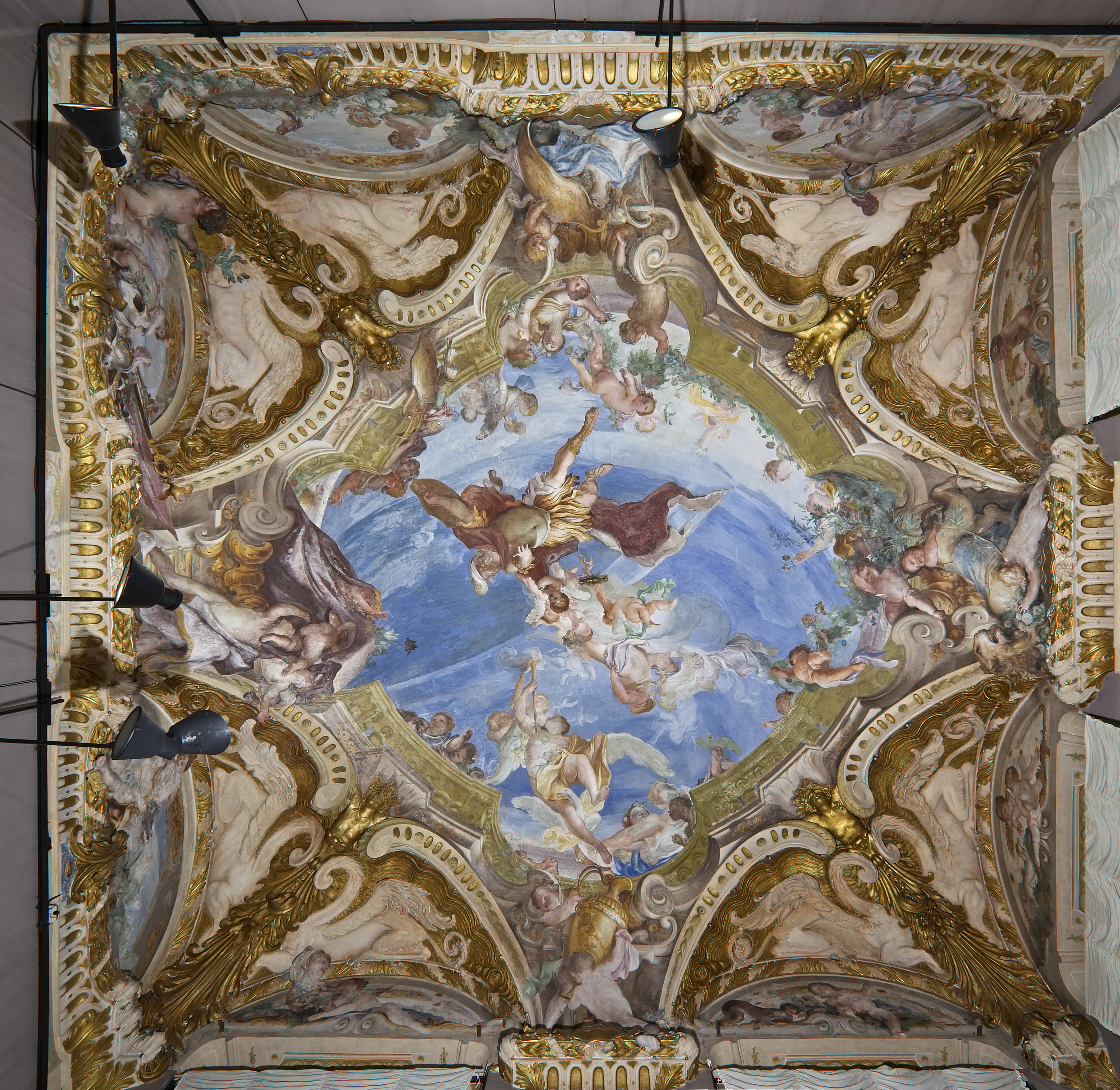
Starting from 1686-1687 Gregorio De Ferrari was engaged, with his father-in-law Domenico Piola, in the fresco decoration of the second “noble” floor of Palazzo Rosso, commissioned by Gio. Francesco I Brignole - Sale (1643-1694): starting from the hall, passing through the four rooms to the east up to the south loggia facing the sea, a single and consistent iconographic project is developed which has as its central conceit the linking of Apollo god of the Sun, who with his chariot marks the rhythm of the days, and the owner of the house Brignole - Sale, whose heraldic coat of arms, a rampant lion, is the zodiac symbol of summer, the season of the sun.
The decoration of the hall, created by Gregorio De Ferrari is the fulcrum of this complex figurative system, revolving around the mythical figure of Phaethon, son of Apollo. It bears the coats of arms of the patrons, Brignole and his wife Maria Durazzo in the corners: unfortunately this decoration was destroyed due to the bombings of the second world war. Following this we find the lounges dedicated to the allegories of the Four Seasons, iconographically connected to the general symbolic plan as emblems of the passage of time. In the first two rooms, still the work of De Ferrari, Spring and Summer triumph in the centre of two ceiling vaults framed by stucco work by Giacomo Maria Muttone. In the summer room Cerere, goddess of the harvest, flies next to a putto holding a large bundle of golden ears of wheat, prevails over the winter winds driven by the Aura, while the centre of the composition is again dominated by the figure of Apollo the Sun accompanied by a lion, this time allusive also - as already in the hall - to the sign of the zodiac and therefore to the summer, in an amusing play of references both astrological and dynastic.


Foto di Penitent Magdalene

Click here to view image

Author/ School/ Dating:

Antonio Canova (Possagno, 1757 - Venezia, 1822)

Back to Focus:
Descrizione:

Penitent Magdalene

The work, considered one of the artist's first masterpieces as a mature artist, bears the inscription "Canova Roma 1796" on the back. Commissioned by his (Bassanese) friend and administrator Tiberio Roberti (1749-1817), the sculpture was preceded by a drawing of the Bassanese notebook Eb and two “bozzetti” (models), one in raw earth, now in the collections of the Venetian Civic Museums, and one in terracotta, still in the Canovian collection of the Museums of Bassano del Grappa, and from a plaster model, identified with a statue in the Civic Museums of Padua. In April 1794 the sculpture was in progress and was completed if not before the Ascension of 1796, immediately after.
In 1797 Roberti renounced the purchase of the sculpture due to economic difficulties linked to the Napoleonic battles in the Venetian countryside. Francesco Milizia, the Venetian critic, procured a new buyer for Canova in Giovanni Priuli (1763-1801), Venetian national auditor at the Tribunal of the Sacra Rota, who became its “virtual” owner before June 1797, without however taking possession of it. During the  period of the “Direttorio”, the sculpture was purchased for 1000 “zecchini “ (twice what was initially budgeted!) By Jean-François Julliot, a marchand, a man of great wealth obtained from para-military supplies during the Napoleonic campaigns of Italy and Egypt. He was the representative of the Cisalpine Republic in Rome, Juliot brought the Maddalena to Paris, Canova's first work to reach the French capital; it was then sold to Giovanni Battista Sommariva - (1757-1826), a prominent member of the Milanese triumvirate who had  launched the second Cisalpine Republic between 1800 and 1802 - he exhibited it at the Parisian Salon of 1808: it’s appearance was greeted with great enthusiasm by the public, while sparking a critical debate about the artist's choices regarding the boundaries between painting and sculpture and the possible relationship between the two arts. In the penitent Magdalene, in fact, Canova works marble molding the material to its extremelimits, passing from the extreme smoothness of Maddalena's patinated figure to the roughly hewn appearance of the base on which it stands; Furthermore, the gilded bronze insert of the cross, together with the realism of the tears and the flowing hair that the artist treated with wax mixed with sulfur, to create its colour, appears a conscious meditation on the possibility of achieving the same effects in sculpture as in painting. These experimental aspects, combined with the undeniable sensual charm of the work, determined its extraordinary fortune in the romantic age, thanks also to the admiration of it epressed by Stendhal.
Sommariva subsequently transported the work to Milan where it was sold to the Marquis Aguado, in 1839 returning once again in Paris. After the latter's death, it was purchased for 59,000 francs by Raffaele De Ferrari, Duke of Galliera, and placed in his Parisian residence. It then passed to the city of Genoa in 1889 as a legacy of his widow, Maria Brignole - Sale de Ferrari.


Foto di Hopiland Landscape

Click here to view image

Author/ School/ Dating:

Hopiland Landscape

Back to Focus:
Foto di Giuseppe Mazzoni, La Grande Genova. Veduta d’insieme della Grande Genova con le opere realizzate e altre allo stato progettuale.

Click here to view image

Author/ School/ Dating:

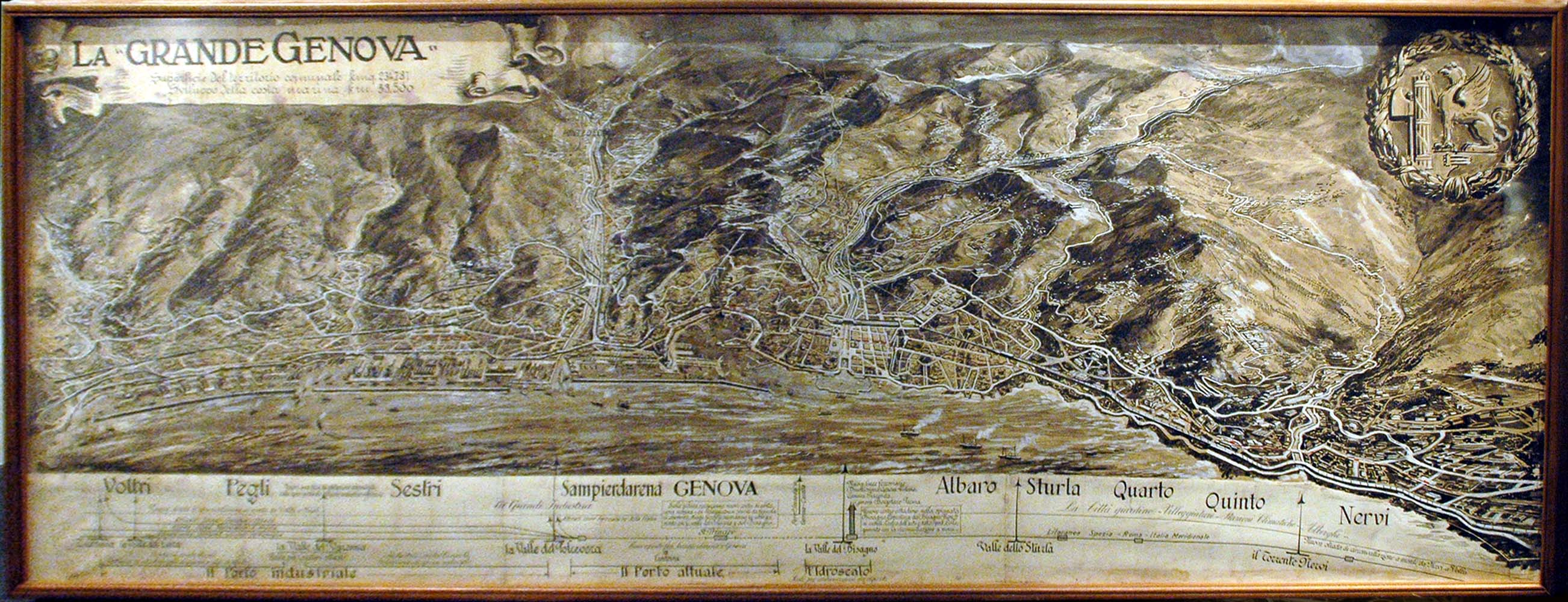
Giuseppe Mazzoni, La Grande Genova. Overall view of the “Grande Genova” with the works carried out and others in the design stage.

Technique and Dimensions:

tempera su carta

Descrizione:

1926, tempera on paper, dimensions: cm. 80 x2 00

With resolution of the Prefect Commissioner n. 1102 of 26.08.1926 Giuseppe Mazzoni was commissioned to produce a prospect of Genoa and the Municipalities annexed to it in 1926, for the fee of £. 2,500.

The view of the “Grande Genova” was exhibited in Tripoli in 1927 on the occasion of the 1st Tripoli Fair.

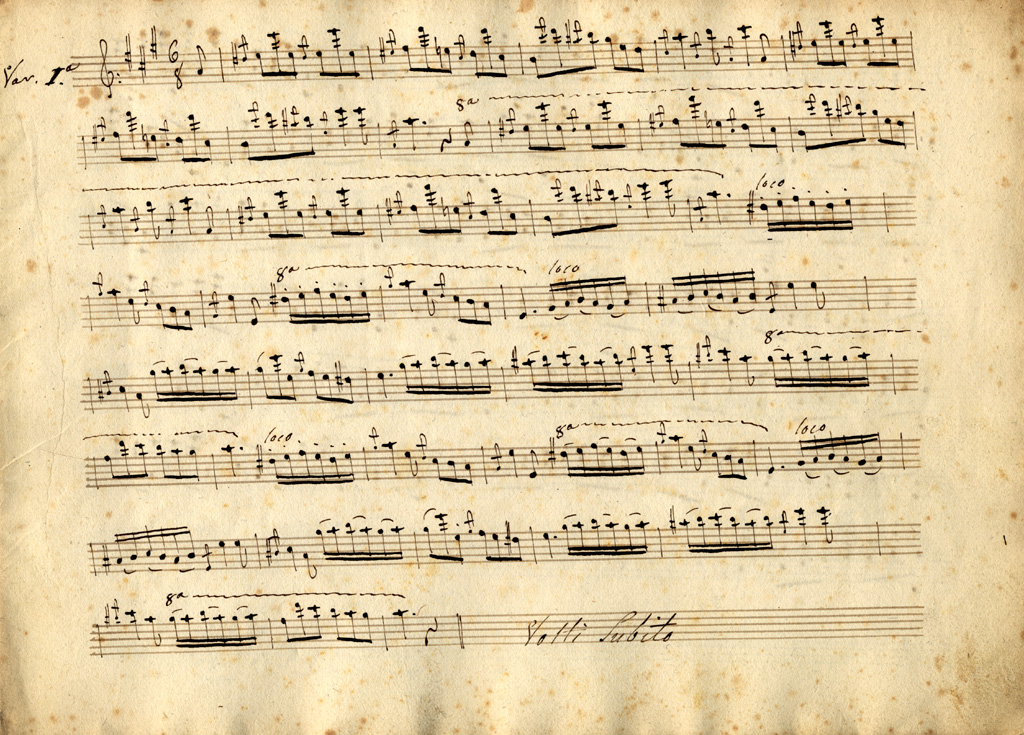
Foto di Niccolò Paganini. Variazioni sulla Carmagnola

Click here to view image

Author/ School/ Dating:

Niccolò Paganini. Variations on the Carmagnola

Descrizione:

Musical manuscript

In recent years the collections of the Historical Archive have been enriched with documentary material relating to the great violinist, including the score of Carmagnola, the National Anthem and letters, dated between 1831 and 1839.

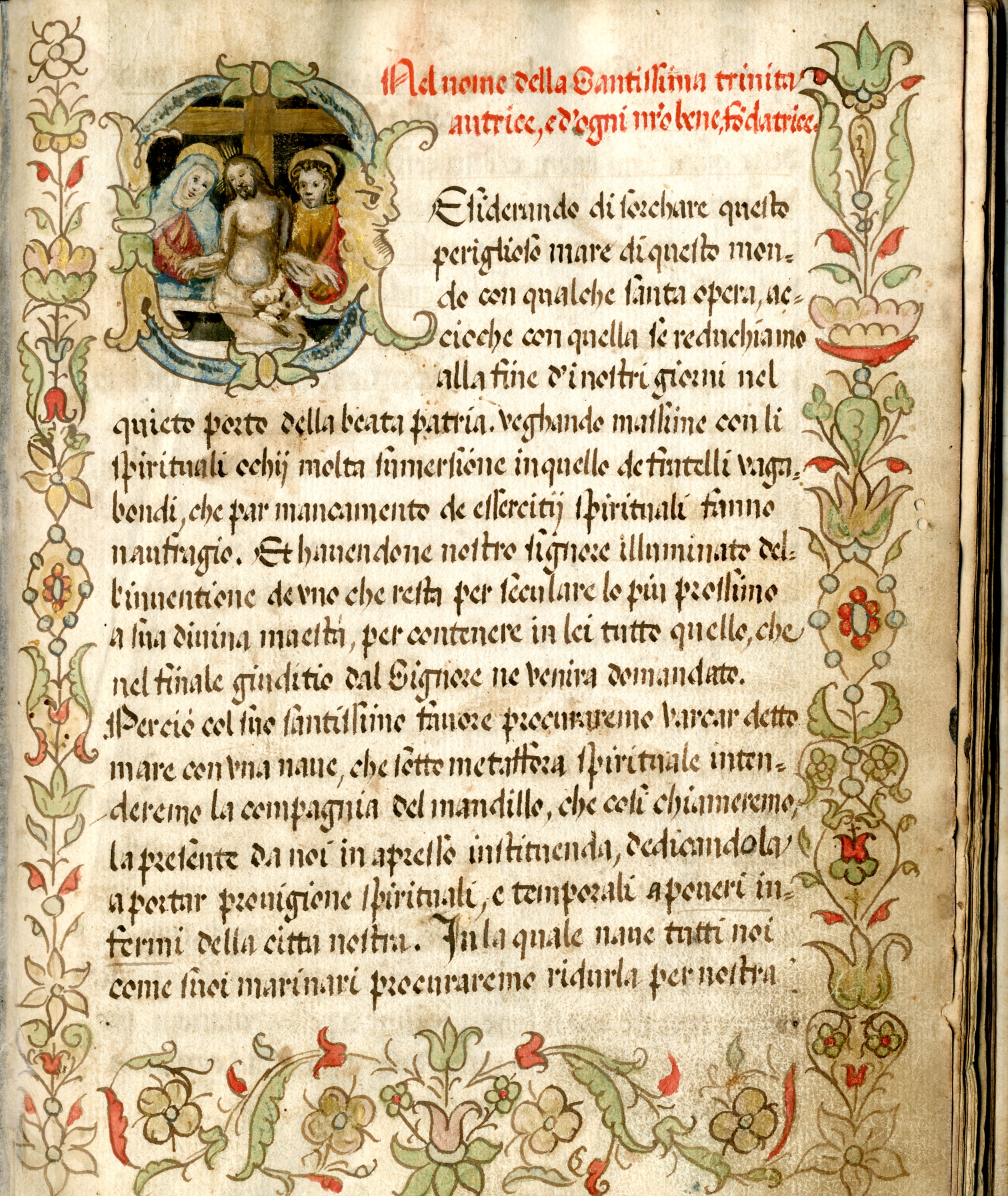
Foto di Statuti della Compagnia del Mandiletto

Click here to view image

Author/ School/ Dating:

Statutes of the “Compagnia del Mandiletto”, sec.XV

Descrizione:

Among the volumes of religious history preserved in the Municipality's Historical Archive, the Statutes of the Compagnia del Mandiletto, an association founded in Genoa at the end of the fifteenth century with the aim of dedicating itself to the collection and distribution of money to the poor of the city, worth mentioning for the great vitality of the confraternity movement in the “modern” era in Genoa.