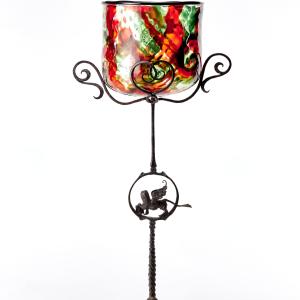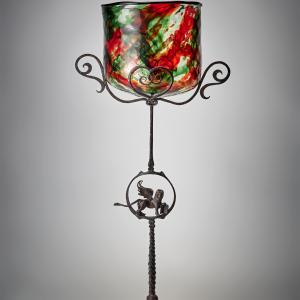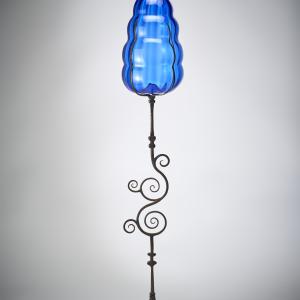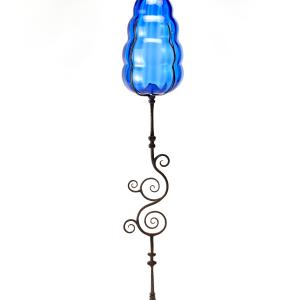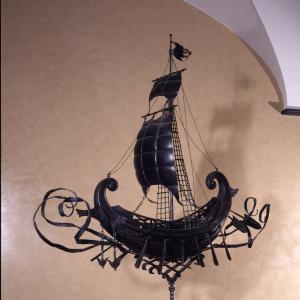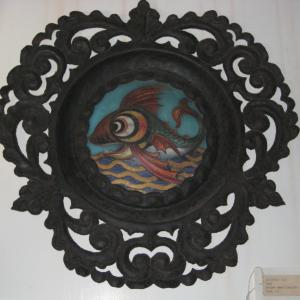




With the purchase, in 2021, by the Ministry of Culture of several works by Umberto Bellotto (Venice 1882-1940), which had become the property of the Giorgio Franchetti Gallery at Ca' d'Oro in Venice and were subsequently placed on temporary loan at the Wolfsoniana and exhibited at the permanent exposition with other works of the Venetian master and other leading Italian wrought iron artists of the 20th century.
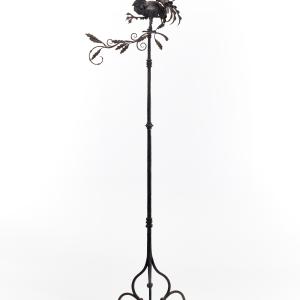
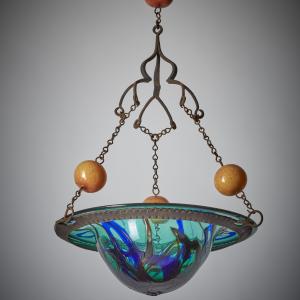
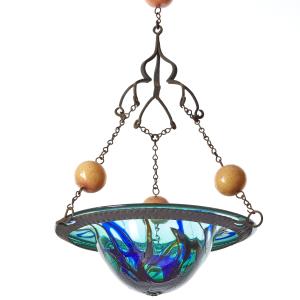
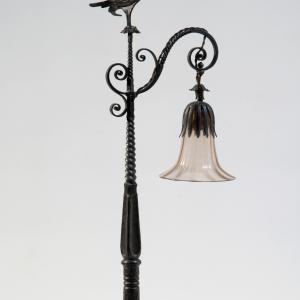
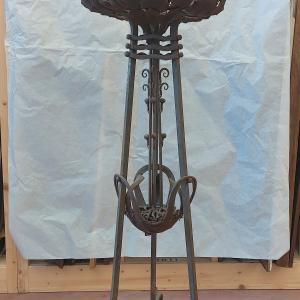
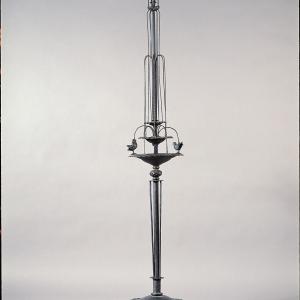
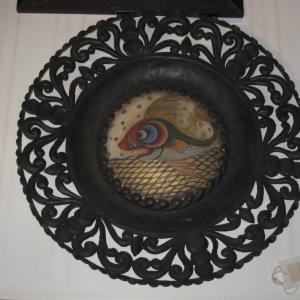
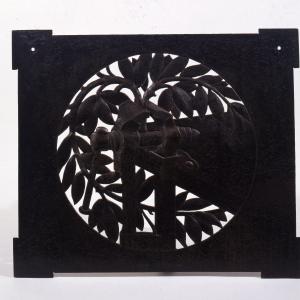
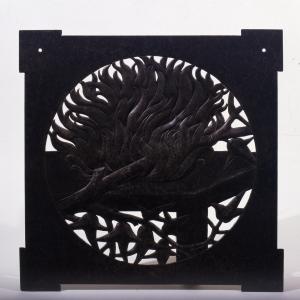
Bellotto's works from the Wolfsoniana collections— Vessel with a light, fluttering structure, suspended on a stem, and two plates with central glass inserts depicting fish—are displayed alongside a tripod surmounted by the silhouettes of a rooster and a branch with lanceolate leaves; Two examples of those "connubi" in which, with elegance and lightness, Bellotto combined his moving and energetic iron scrolls with the glass creations of the Barovier Artists and the Toso Brothers, and a wrought-iron chandelier with a blown glass bowl, visible from the second-floor staircase.
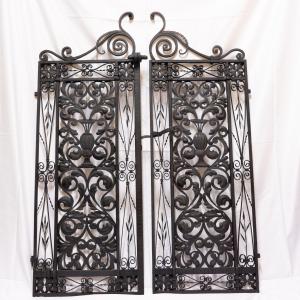
Following the restoration supported by the Vitiello family, these works were joined by a small double gate, whose compositional and iconographic scheme recalls the curls, scrolls, and stylized floral and faunal motifs that characterized the grates, gates, and railings created by Bellotto in Venice and on the Lido. Characterized by a symmetrical decorative layout, the gate features a central cup-shaped motif from which jets and scrolls in embossed iron sheet emerge: a recurring iconographic theme in Art Deco culture that Bellotto took up in several of his creations, as in the case of the internal staircase of the Caffè Ortes in Venice (1924) or the iron and glass door in the Gallery on the main floor of the Ministry of Justice in Rome (1928). The theme of the “frozen fountain”, paradigmatic of Art Deco taste, is also found in the Fountain with jets of water and birds by Carlo Rizzarda (Feltre 1883 – Milan 1931), the author of a table lamp holder from around 1926, which is also featured. The exhibition dedicated to the masters and workshops of wrought iron also includes two perforated and forged iron plates from the Officina Matteucci in Faenza, which, active since the 17th century, distinguished itself during the 20th century for its modern renewal of its production, and a flowerpot attributed to Alessandro Mazzucotelli and dating back to around 1910.