




Click here to view image
Titolo dell'opera:
Bornean orangutan
Epoca:
XIX
Inventario:
110
Misure:
Unità di misura: UNR (; Misure mancanti: MNR
Provenienza (nazione):
Indonesia 1866
Technique and Dimensions:
Leather mounted
Back to Focus:
Descrizione:
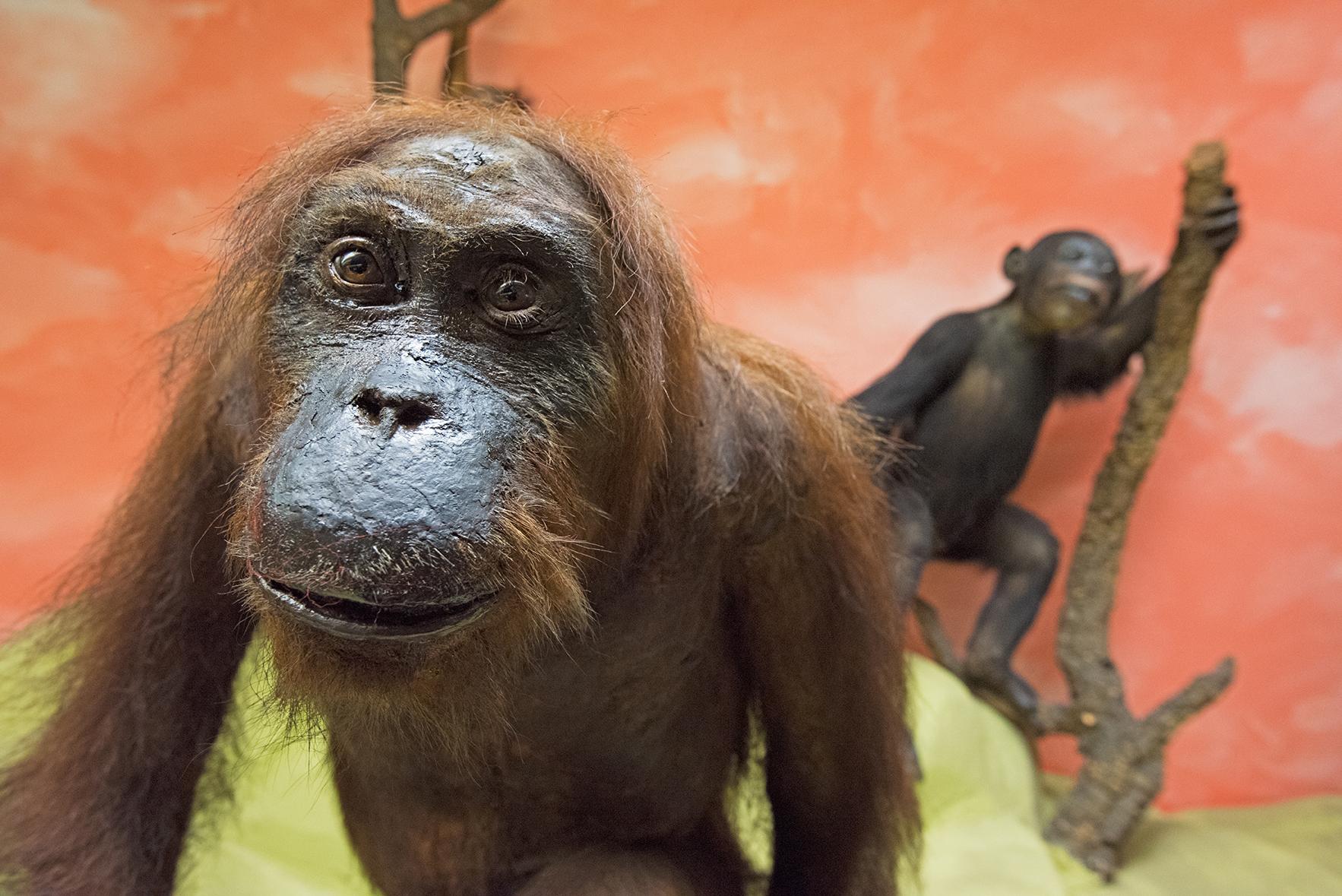
The Bornean orangutan specimen (Pongo pygmaeus), currently displayed in Room 1 of the Museo Civico di Storia Naturale “Giacomo Doria” in Genoa, belongs to the natural history collections assembled before the museum was founded. In 1865, Giacomo Doria travelled to Borneo with his friend, the botanist Odoardo Beccari, to undertake natural history exploration and specimen collecting. In January 1866, Doria decided to return to Italy for health reasons. During a stopover in Singapore the following February, he purchased two young female orangutans aboard a ship arriving from Pontianak, in present-day West Kalimantan, Indonesia. One of the two animals lived in Genoa for some time and is the specimen now preserved and displayed in a glass case beside a large male of the same species. The specimen provides significant evidence of Giacomo Doria’s early scientific activities and the development of Genoa’s zoological collections within the context of nineteenth-century natural history exploration.
The Bornean orangutan is now severely threatened by the progressive destruction of its natural habitat, primarily through the conversion of tropical forests into urban settlements and agricultural land. Additional threats include forest fires, intensive logging driven by the growing demand for timber, and poaching, fuelled both by the trade in live animals and by hunting for meat. These human-induced pressures have caused a drastic decline in wild populations, leaving the species particularly vulnerable to extinction.