




Click here to view image
Titolo dell'opera:
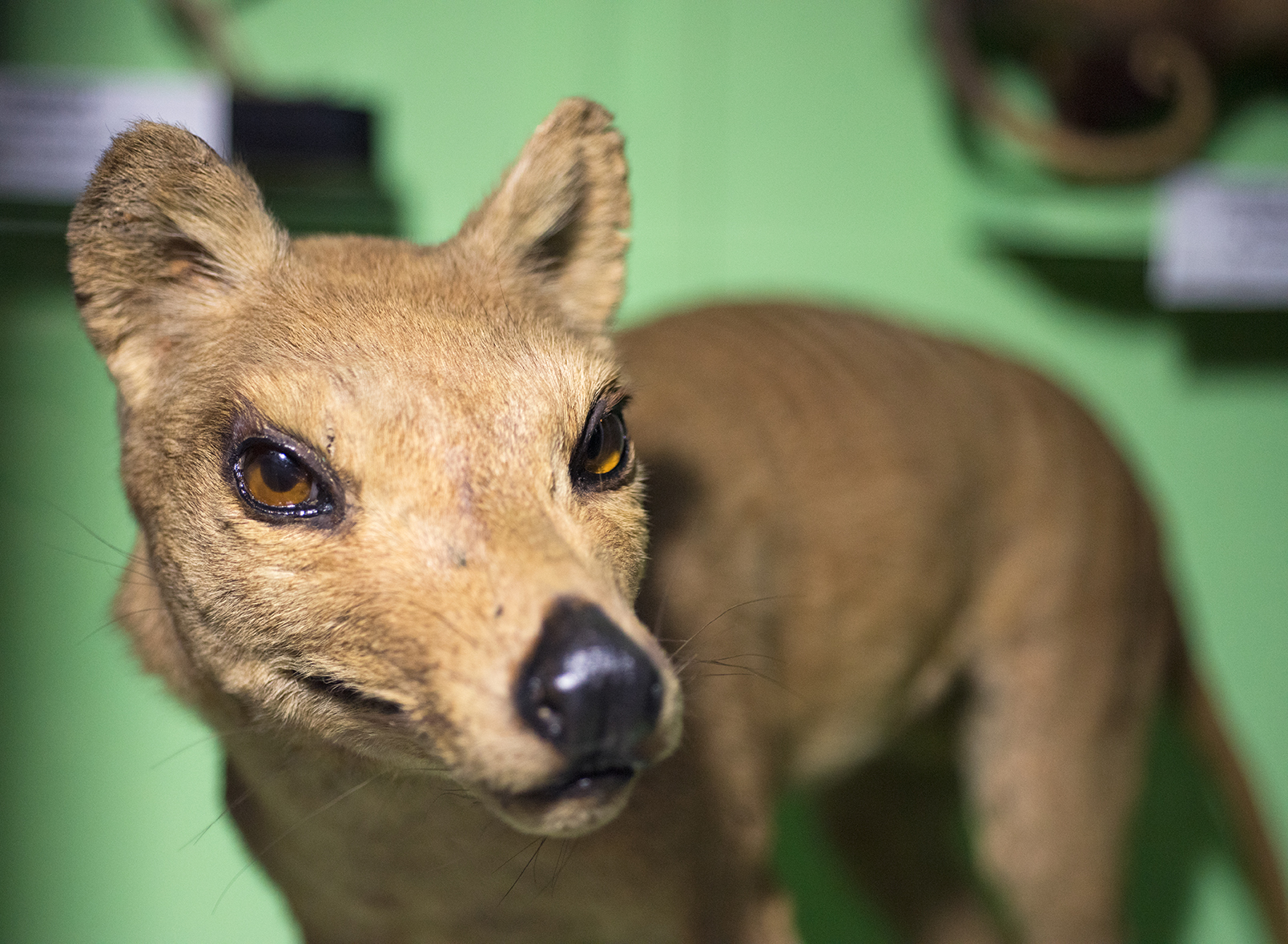
Thylacine
Epoca:
1920s - 1920s
Inventario:
743
Misure:
Unità di misura: UNR (; Misure mancanti: MNR
Provenienza (nazione):
Australia 1883
Technique and Dimensions:
Leather mounted
Descrizione:
The thylacine (Thylacinus cynocephalus), also known as the Tasmanian tiger or Tasmanian wolf, was the largest carnivorous marsupial of modern times. Originally distributed across Australia, New Guinea and Tasmania, it gradually disappeared from the first two regions, probably partly as a result of competition with dogs introduced by Aboriginal populations. In Tasmania, the species was subjected to intensive hunting because it was considered a threat to livestock, particularly sheep, although the extent of such predation remains disputed. By 1863, the thylacine was largely confined to the most remote areas of southern Tasmania. Hunting, habitat alteration, introduced diseases and competition with settlers' dogs contributed to its progressive decline. The last confirmed capture of a wild specimen dates to 1933, while the last known individual died in captivity at Hobart Zoo on 7 September 1936. The species was officially declared extinct in 1986. The specimen held at the Museo Civico di Storia Naturale “Giacomo Doria” in Genoa was donated in 1883 and is displayed in Room 10, dedicated to marsupials. According to the museum's documentation, it is one of only three specimens preserved in Italy and approximately eighty specimens mounted in naturalistic poses worldwide.