


Tales from the Past in the Palaces of Strada Nuova: Stories of Patrons and Illustrious Visitors

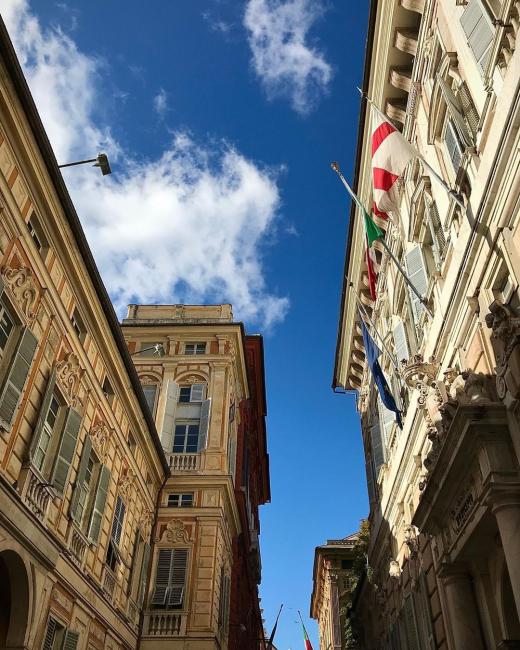
There is a street in Genoa that is not just a street: it is a story. Today it is called Via Garibaldi, but it was once Strada Nuova. Barely 250 meters long, seven and a half meters wide, yet full of memories: ladies, philosophers, artists. The voices you will encounter are those of people who lived in, visited, or imagined the three palaces of the Musei di Strada Nuova – Palazzo Rosso, Palazzo Bianco, Palazzo Tursi – and who still inhabit them today, in silence.

You will walk alongside Oscar Wilde, observe a Van Dyck together with Nietzsche, listen to Paganini’s “Cannone.” You will look out from secret terraces, sense forgotten scents, and see palaces that speak of art, power, and history.

The project is funded within the framework of CTE-Genova – Digital Workshop for Culture – CUP B37F23000000008 – PSC MISE 2014–2020.
Texts: Filippo Ferraresi
Voice: Lucia Ferrari
Post-production: Marta Milone
Editorial supervision: Viviana Costagliola
Scientific consultancy: Raffaella Besta, Margherita Priarone
Production supervision: Simona Bozzolo
Strada Nuova

Episode 1. Three Palaces, One Street

A cloud of dust rises, and the sunlight makes the crystals of stones and dust sparkle. There is the sound of people talking, of hammers, carts, and not too far away the aroma of bread wafting in the morning air. Someone must have leaned out, noticed the great commotion, or must have been on the balcony to see all the coming and going and the great activity of people. An entire neighborhood, an area of the city being rebuilt. Today they call it "Nuova Strada" or "Via Garibaldi", but over time it had many other names: "Strada Maggiore", "Via Aurea", and the writer Madame de Staël even called it Rue de Rois, the street of kings.

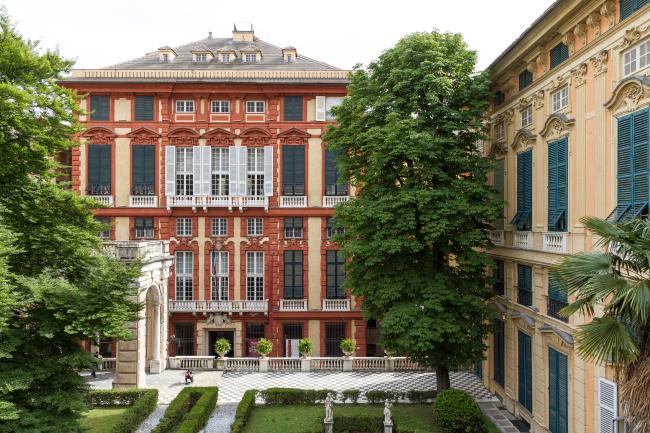
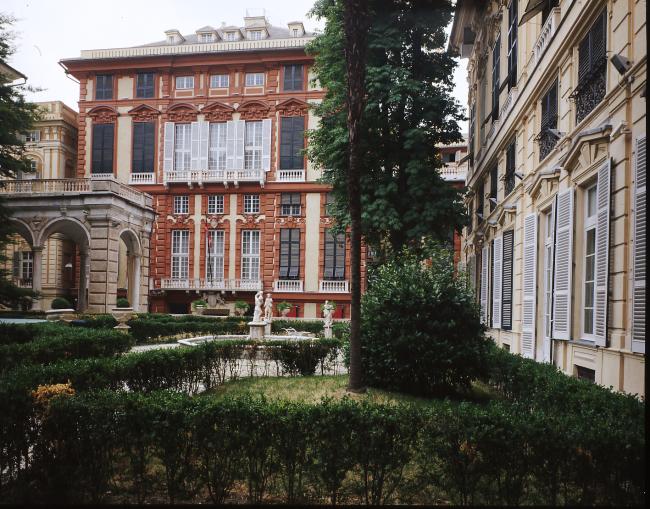
Palazzo Rosso

Episode 2. Palazzo Rosso

A coin spins in the air. Heads. Tails. Two brothers, around thirty years old, smile as they watch it descend between them.
 Heads? Tails.
 Heads: Giovan Francesco Brignole-Sale.
 Tails: Ridolfo Brignole-Sale.
 Heads? Tails?

Hall

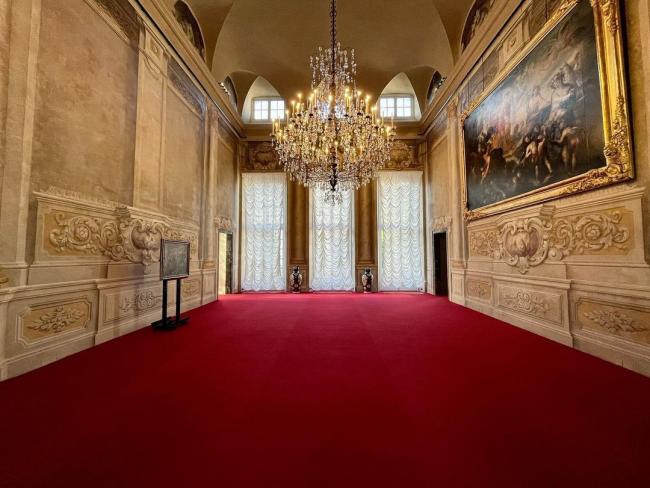
Episode 3. Nietzsche at Palazzo Rosso

A thunderclap. A flag or tent, somewhere, flapping in the wind like a sail. It's raining. Nuova Strada is almost deserted, the sky is low, the air is leaden in color. A lone traveler, weary, observes the palace with the red facade. Shortly before, he had asked a passer-by, and earlier at the hotel, how to get to what is called "Palazzo Brignole". Now he has found it. He does not seem too surprised at first glance, although his face immediately relaxes, and he enters. It is a Friday in May 1877.

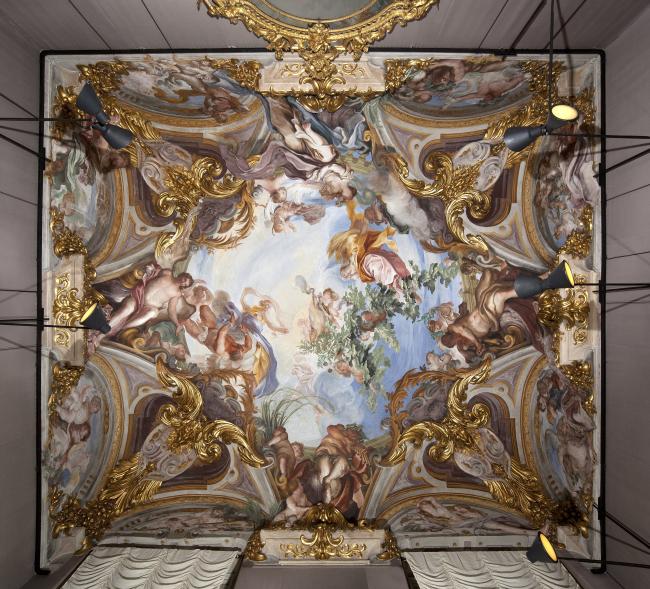
Fresco of the Allegory of Summer

Episode 4. The Tower, the Sea, and Oscar Wilde

The air is fragrant with oranges and salt. The shutters flutter softly. Some days the city seems enveloped in a milky substance made of sun and warm air, little naps and coffee taken in a time that seems like a very long Sunday. It is on these days that the custodian of Palazzo Rosso, as we like to imagine him, crosses the solitary halls and reaches the terrace. From there, all the streets of the city disappear: Genoa becomes roofs, palaces, tiny lives upon tiny lives, sea, horizon, wind.

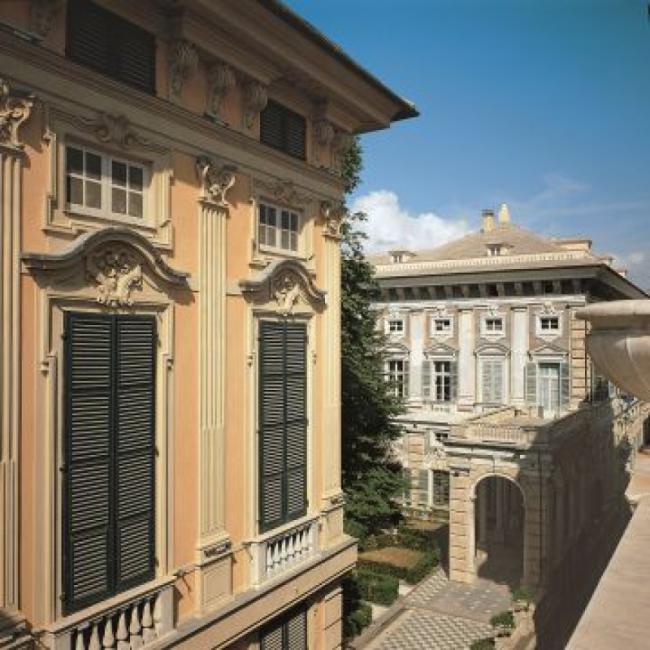
Palazzo Bianco - facade

Episode 5. Palazzo Bianco. A New Residence for the Brignole-Sale Family

Every morning, in 1711, a little girl, perhaps the daughter of a cook, would quietly climb up on a stool and observe. From the window, she could see a gray palace, puffs of dust, and workers coming and going ceaselessly. It could be an impressive sight. An entire palace being remodeled. 

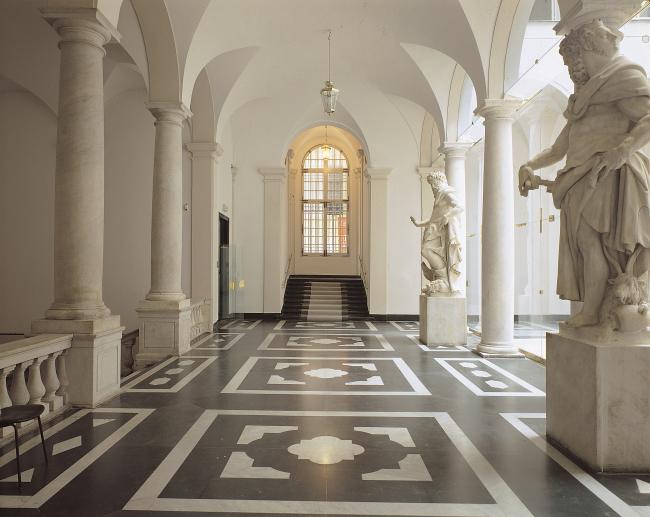
Loggia of Palazzo Bianco

Episode 6. Art and Valery Larbaud

It is not certain that Valery Larbaud actually passed through Genoa. It is likely that someone like him, a cosmopolitan poet and novelist, full of life and from a wealthy family, had the opportunity to do so. He would not have gone unnoticed in the city. 

Garden

Episode 7. Flaubert and the Gardens of Strada Nuova

There is a moment, during travels, when one realizes that one is truly in a different place. Where beauty surrounds us in a present way, where the heart slows down a bit, the sense of smell intensifies and here is the mint, the coffee, the dust, the basil and the flowers; and the hearing perceives the little birds, the shouts of the children that disturb, the old people who converse, the artisans, the iron that beats, the silence becomes silence, yes, but made of a mosaic of other infinite small things. It is then that we understand that we are truly elsewhere and, perhaps, that we are happy.
In 1845, Gustave Flaubert was 24 years old...

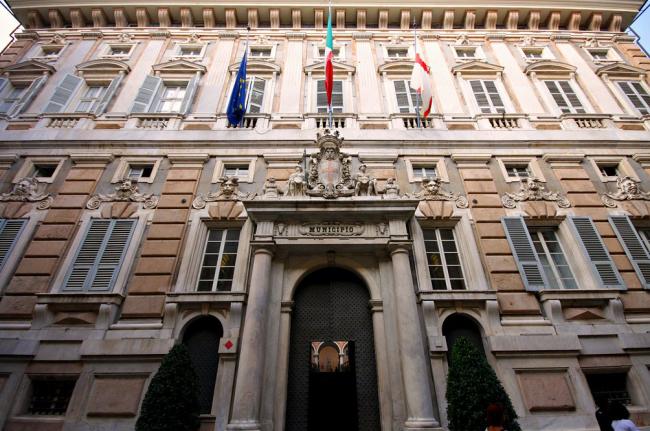
Palazzo Tursi - Facade

Episode 8. Palazzo Tursi, Stories of Power

A magnificent building. Built on three lots of land with two gardens. Palazzo Tursi was born in 1565 for the Genoese banker Niccolò Grimaldi, also called "the Monarch" due to the numerous noble titles he held and his great wealth. It was conceived as an astonishing work, with the aim of being one of the most beautiful palaces in Genoa

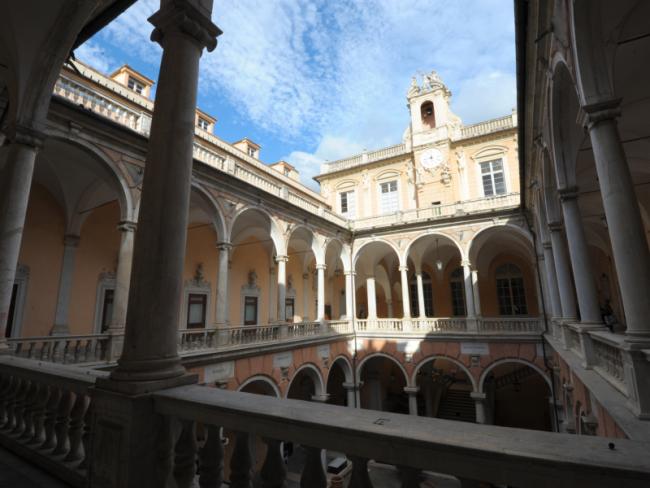
Palazzo Tursi – Upper Loggia

Episode 9. Jacob Burckhardt in Genoa

"The sea baths, the proceeding with the small boat, finally the port, a vision of things completely new to me." It is 1838, and the historian and art critic Jacob Burckhardt (iacob burkart) is in Genoa for the first time. He is not yet famous for his works, it will be two more years before his first publication. He is crossing Italy, and the previous stop was Milan, the Duomo and its beauties that, however, did not leave him changed. But arrived in Genoa,...

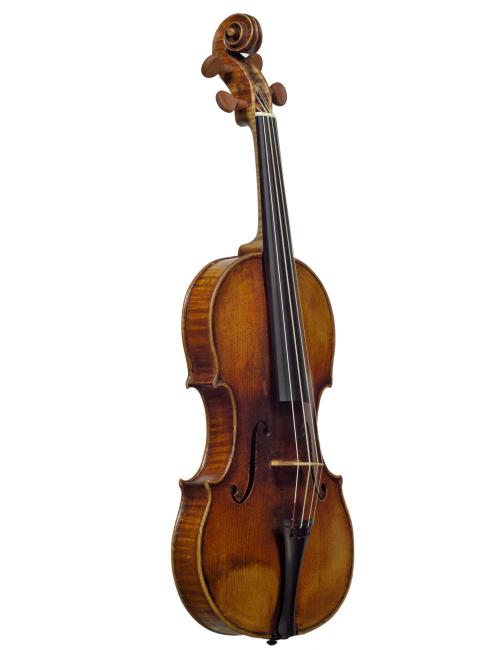
Paganini’s Violin

Episode 10. Paganini’s Violin A

The noises of the wind, the lightning, the almost still lakes in April, the buzzing of insects, the whispers in the night, a falling tree, a laugh, a cry from a fall, the clamor of the crowd during the market. The tumult of a nightmare, the blossoming of a love. A violin, in the right hands, can become anything.
If in Genoa we cross the loggia of Palazzo Tursi, we pass in front of the Ancient Hall of the City Council, we arrive at a violin. It has been an instrument listened to throughout the peninsula, applauded, and whose music has crossed so many lives, sounds, dreams and transformations. It is called "the Cannon," and it was the instrument of a legendary 19th century violinist, the Genoese Niccolò Paganini.